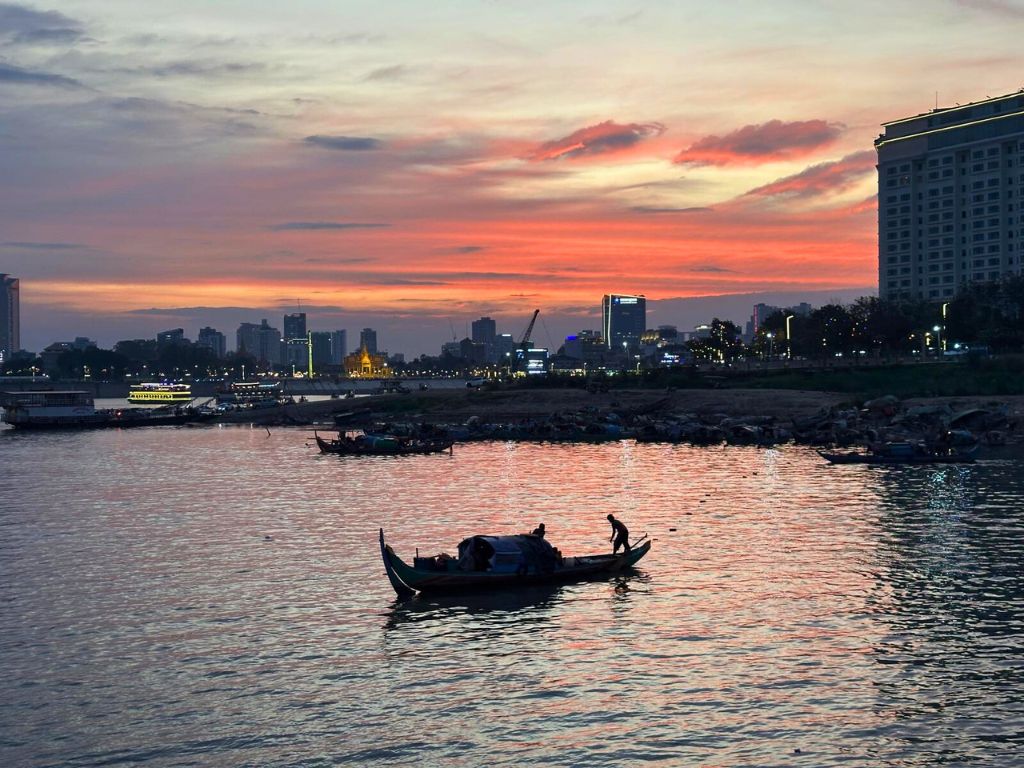
When we arrive in Phnom Penh city, the first thing that strikes us is the water. The Mekong, Bassac, and Tonle Sap rivers all come together here, with the life of Phnom Penh seeming to ebb and flow with them. Fishermen cast their nets at dawn, while at sunset, the rivers reflect the city’s golden light.
Located in Southeast Asia, Phnom Penh is not just a stopover on the way to enjoy the unique architecture of Siem Reap or the southern beaches. It’s a city that deserves to be appreciated on its own terms. Founded in the 14th century, Phnom Penh has weathered the rise and fall of kingdoms, the weight of colonialism in Cambodia, and the devastation of the Khmer Rouge movement. Today it’s the country’s largest and capital city, home to over two million people who bring endless vitality to its busy streets.
We return to this part of Asia often. That’s because Phnom Penh holds stories of Cambodia’s history and the Khmer kingdom you can’t hear anywhere else. These stories are told through its architecture, its markets, its food, its people, and its cultural attractions. We’ve created this guide to share what we’ve learned exploring this remarkable capital city, and to help you experience it thoughtfully as a visitor.
Historical Landmarks
Walking through Phnom Penh, you notice how the city’s layers of history are everywhere.
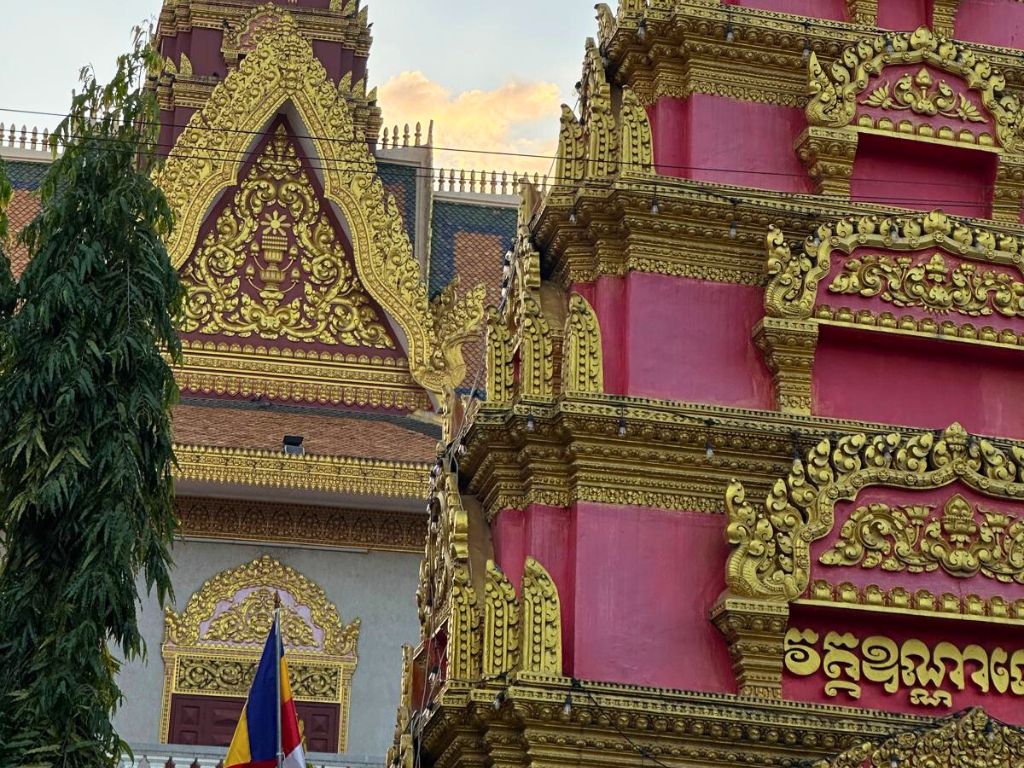
The Royal Palace
At one end of the city the Royal Palace rises above manicured lawns, its gilded spires glinting in the sun. This is where Cambodia’s king and royal family still reside. The atmosphere at the Royal Palace is quiet and formal. Visitors move slowly, taking in the carved wooden doors and tiled roofs that speak to centuries of Khmer tradition.
Inside the grounds of the king’s Royal Palace, the Silver Pagoda draws the eye, lined with thousands of silver tiles and a collection of Buddha statues that gleam under the soft light. For Cambodians, this is a sacred place, a site of reverence and celebration, and it’s definitely worth exploring on any trip to Phnom Penh.
Wat Phnom
Just a 30-minute stroll from the Royal Palace and the king’s home, you’ll find Wat Phnom. This hilltop Buddhist temple is one of the city’s top attractions and is often credited with giving Phnom Penh its name.
According to local Cambodia legend, Lady Penh discovered sacred Buddhist relics on this spot in the 1300’s and built a shrine to house them. Today, locals climb the steps to light incense, while children chase each other around the base.
Understanding Cambodia’s History
While many of the historical sites here celebrate the past, such as the Royal Palace and Independence Monument, which honors Cambodia’s independence from France in 1953, Phnom Penh also asks us to remember its darkest chapter in history. At the Tuol Sleng Genocide Museum, housed in an old high school which became a Khmer Rouge prison, the air feels heavy. Black-and-white photos line the walls, and the empty cells speak volumes about the suffering that occurred in the country during the Khmer Rouge regime.
About thirty minutes outside the city lies Choeung Ek, known as the Killing Fields, where the skulls of victims act as a quiet memorial. Places like the Killing Fields are sobering, but visiting them is essential to understanding the resilience of Cambodia and the kindness of the local people you’ll meet throughout your stay in Phnom Penh.
Cultural Attractions
Phnom Penh is about more than just its Royal Palace and monuments. It’s also a city of lively exchanges, which can be found everywhere from its markets and workshops to its music, food stalls, and local cultural events.
The Central Market is a place we love to visit time and time again. This eye-catching art deco landmark hums with life from morning to night. Here, you can find practically anything you might want: silver jewelry, hand-woven scarves, local produce, electronics, and a quick bowl of noodles if you don’t fancy eating at restaurants every day. Or for a more intimate—even chaotic—experience, head to the Russian Market, where the narrow aisles are filled with the scent of spices and grilled meats. Bargaining here is all part of the Cambodia experience.
Away from the busy markets, the National Museum of Cambodia is a calmer place where you can wander past serene Khmer sculptures, some dating back a thousand years, and pause in the quiet central courtyard. It’s one of the country’s top attractions. You can even catch a traditional dance performance at the National Museum, or participate in a dance workshop.
We also enjoy passing by the Royal University of Fine Arts, where talented dancers and musicians practice classical Khmer arts. From the street, you can often hear the captivating sounds of traditional instruments. And there’s nothing quite like taking a stroll along Sisowath Quay, where families gather at sunset, vendors sell snacks, and Buddhist monks give a unique glimpse into the rich culture of Phnom Penh and Cambodia as a whole.
Day Trips from Phnom Penh
Phnom Penh, Cambodia, is an unforgettable destination in its own right. From the Royal Palace to the National Museum, there’s plenty to keep you busy. But if you are able to find the time to venture out from the city, it’s well worth it, with the surrounding countryside revealing another dimension to Cambodia’s story.
To the northwest of Phnom Penh, you’ll find Udong, the former royal capital of Cambodia. It sits on a hill overlooking miles of fields used for rice milling. Its ancient stupas (spired mausoleums) and quiet paths make it a reflective place to spend a few hours. Or if you’re craving green space and cooler air, head to Kirirom National Park. Pine forests and waterfalls offer you the chance to go hiking, and on weekends, you’ll see Cambodian families picnicking in the shade.
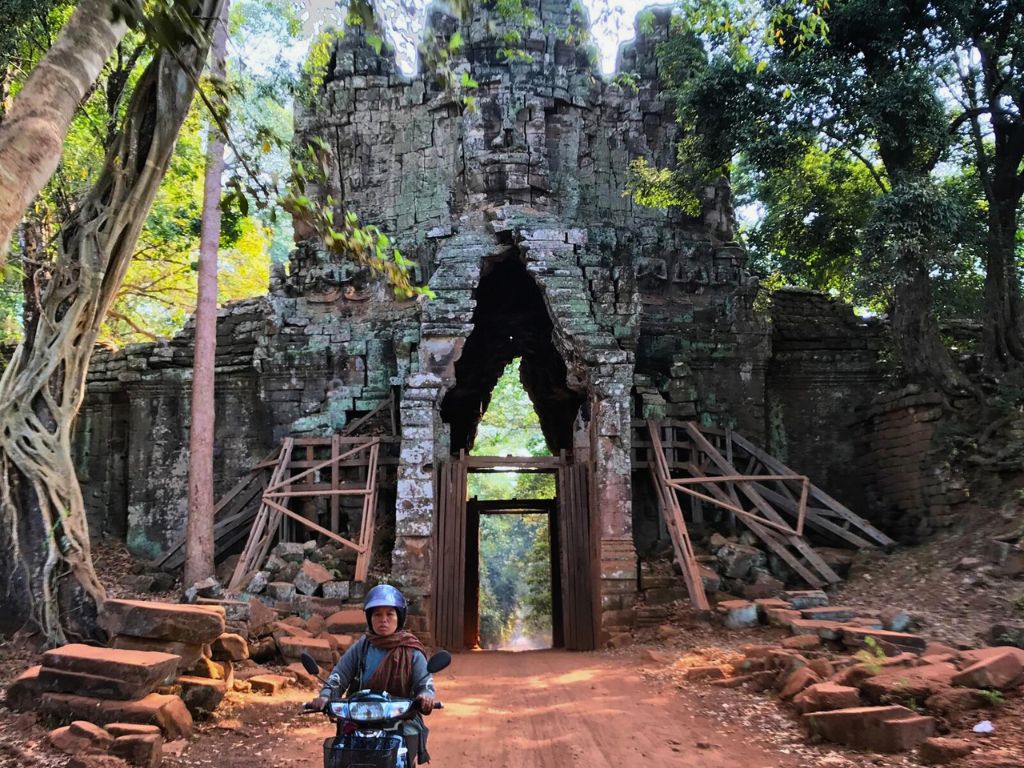
A boat trip on Tonle Sap lake gives you a chance to observe the iconic floating villages of Cambodia and the way rural life depends on the rhythm of the water. For longer excursions, both Siem Reap—home to the Angkor temples—and Sihanoukville with its beaches and fishing villages, are easily accessible from Phnom Penh.
Transportation in Phnom Penh
Traveling to and through Phnom Penh, Cambodia, is straightforward, though as with many places in Asia, it sometimes requires a little patience. From Phnom Penh International Airport, you can reach the capital city by taxi or pre-booked transfer in about 30-40 minutes. Once there, the tuk-tuk is our preferred way to get around. Not only is it affordable, but it allows you to feel the air and watch the city unfold as you move. Be sure to agree on a fare before setting off.
Taxis and ride-hailing apps are available across Phnom Penh if you prefer to travel with air conditioning. Public buses have become much more common in recent years, connecting key Phnom Penh neighborhoods and helping students of the National University get around at a low cost.
For trips outside Phnom Penh city, trains offer a scenic but slow way to reach Sihanoukville, Poipet, and other places of interest in Cambodia, passing through quiet villages and fields. It’s a good option if you have the time to spare.
Food and Drink
The food of Phnom Penh tells its own story, blending ancient Khmer traditions with influences from France, Vietnam, and other regions of Cambodia. Local restaurants often serve up fish amok, a delicate curry steamed in banana leaf. Mornings are the perfect time to try nom banh chok, a light rice noodle dish that’s often eaten for breakfast across the country.
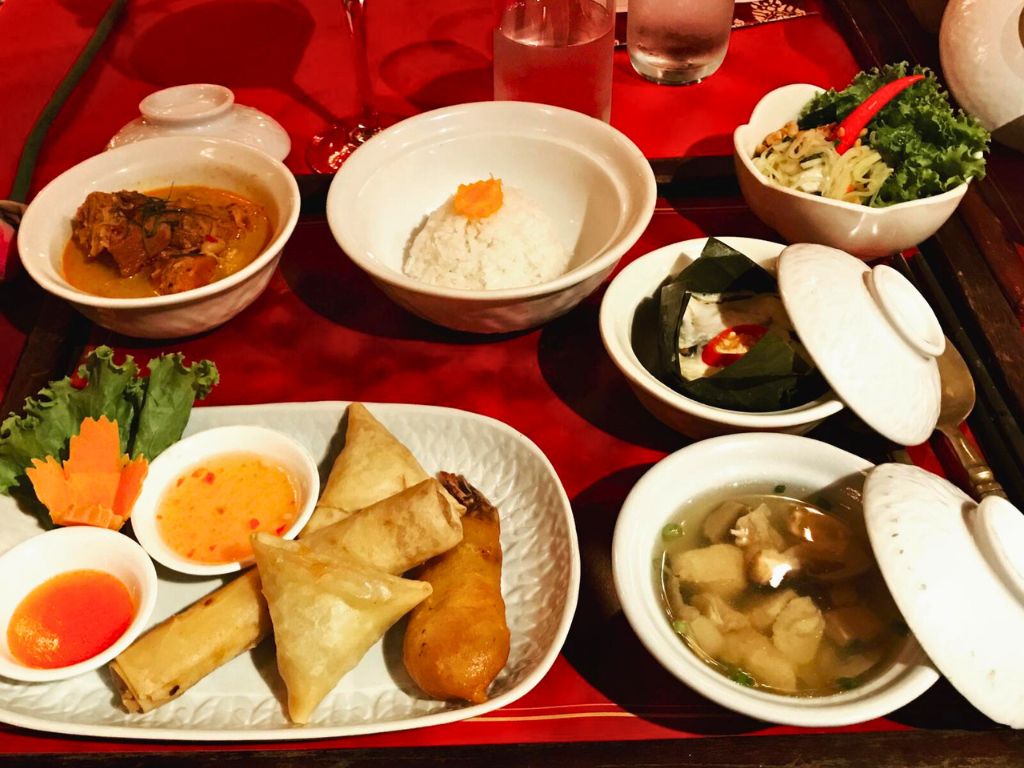
We also recommend ordering the Khmer red curry when you’re out for dinner in a restaurant, often served with crusty baguette in a nod to the French colonial period. On hot afternoons, there’s nothing more refreshing than sipping fresh coconut water from a local city street vendor, or cooling off with an ice-cold Angkor beer at a riverside café if you fancy something stronger.
Markets and small, family-run restaurants all over Phnom Penh serve endless variations of grilled meats, spicy salads, tropical fruits, and Khmer cuisine. A visit to Phnom Penh is a chance to sample a bit of everything.
Safety and Precautions
We have always felt welcome in Phnom Penh, but like any busy capital city, it pays to stay alert. Pick-pocketing can happen in crowded markets or busy museums, or on a moving tuk-tuk, so keep valuables secured.
Remember that Phnom Penh city is incredibly busy, so traffic can feel chaotic. Cross streets carefully and avoid rushing; cross only when you’re comfortable. And if you ride a bike or motorbike, wearing a helmet is essential. If using public transport options like taxis or tuk-tuks, we recommend agreeing on prices with drivers before hopping in, and researching common tourist scams so you can sidestep them confidently.
Stick to bottled or boiled water during your trip; never drink water straight from the faucet. And remember to apply sunscreen, especially if you’re visiting Phnom Penh during the hottest, sunniest time of year.
Best Time to Visit Phnom Penh City
We like the shoulder seasons, April, May, September, and November, for their lower crowds and moderate weather. But December to February tends to be the ‘peak season’, so you’ll find a really lively atmosphere during these months which we love. There is a quieter environment in the off-season, typically around June and July.
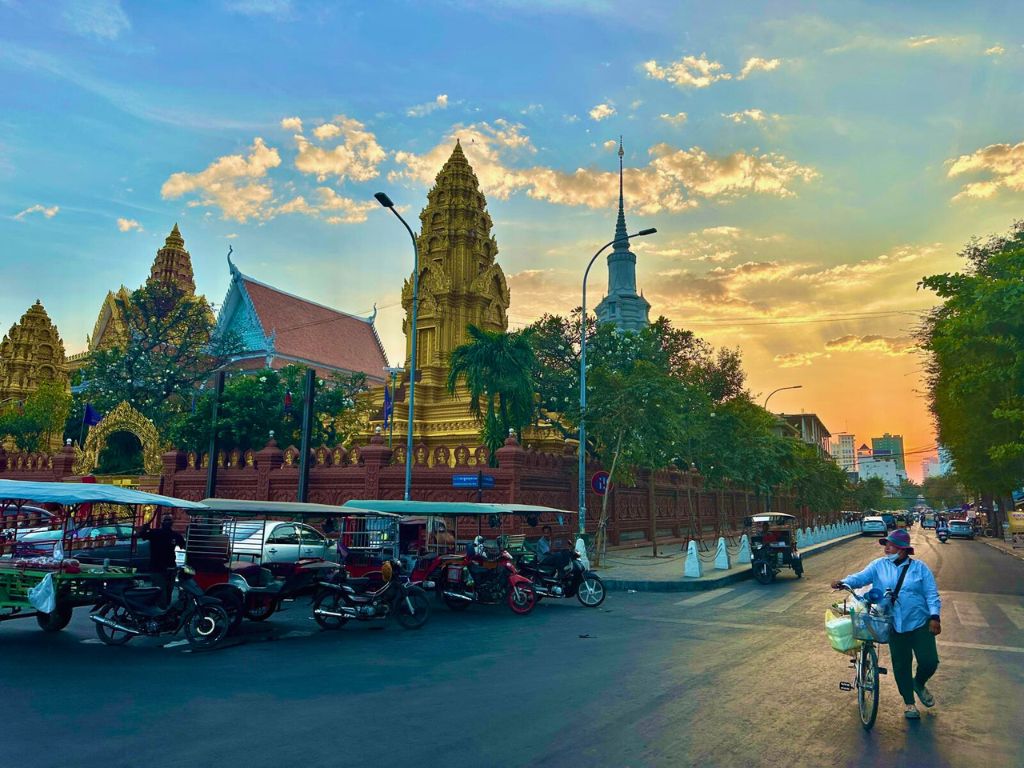
The timing of your trip can influence your Phnom Penh experience greatly. The dry season, from November to March, offers cooler days and clear skies, making it the ideal time for exploring the capital city, visiting temples, and sightseeing.
The wet season in Phnom Penh runs from April through October, bringing heavy rain and sticky heat. While not ideal for hikes, the months of June and July especially do a great job of painting the countryside a vivid green.
Join Us in Phnom Penh City
Phnom Penh is a city that manages to be elegant and chaotic, graceful and gritty, quiet and alive with sound… all at the same time. It asks visitors not just to look, but to listen: to the sounds of the Mekong, Bassac, and Tonle Sap rivers; to the history and culture; to the vitality of present-day Cambodia.
We’ve stood in the peaceful gardens of the Royal Palace, watched locals light incense at Wat Phnom, and walked slowly through the solemn corridors of Tuol Sleng, listening to the stories of the Khmer Rouge. We’ve reflected at the Choeung Ek killing fields, bargained at the Central Market, sipped coffee at Sisowath Quay, and shared meals with locals who generously explain what this city means to them. And we keep coming back.
If you’d like to explore Phnom Penh city with us, to take a cyclo tour through its streets, visit the Royal Palace, see the Silver Pagoda, reflect at the Tuol Sleng Genocide Museum, and watch the sun set over the Mekong, we invite you to join our next Cambodia adventure. Discover this extraordinary city alongside thoughtful guides who care deeply not only about today’s Phnom Penh, but also its past and its future.