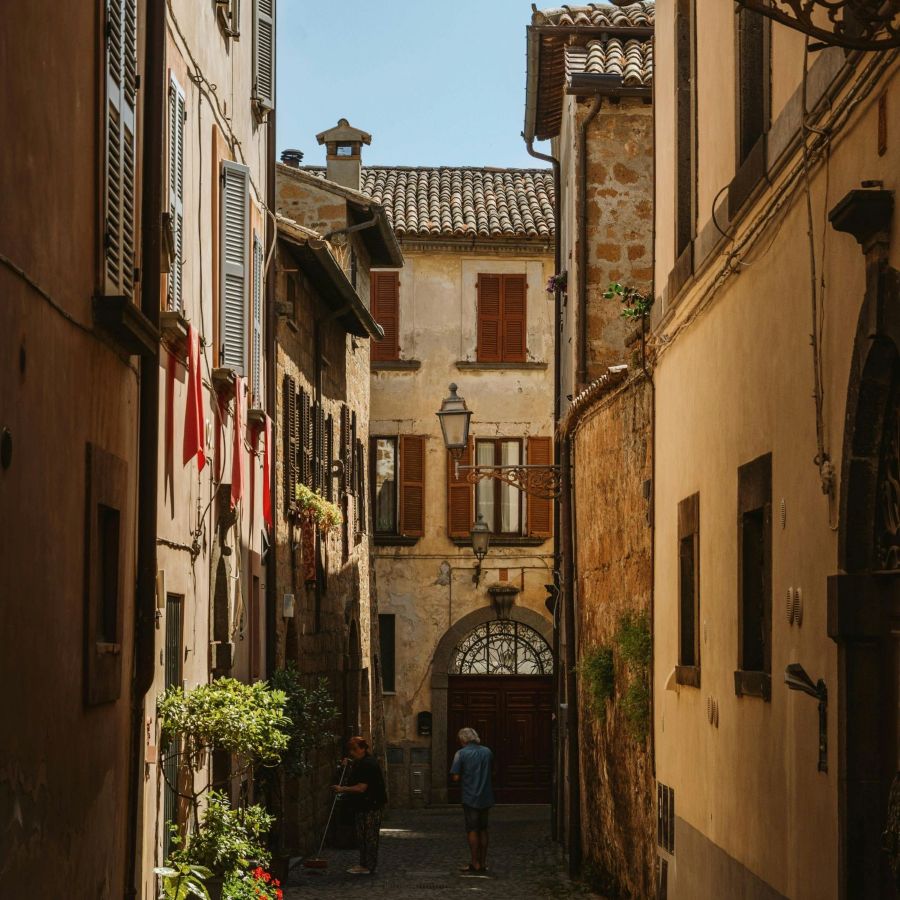

As Italian hilltop towns go, Orvieto definitely ticks a lot of boxes. With incredible views of the surrounding countryside, medieval narrow streets, a beautiful cathedral and lots of great places to eat and drink the local cuisine, Orvieto makes for a fun day trip or somewhere to spend a few nights during your Italy adventures. Having spent a lot of time here ourselves, there are some important things to know to make the most of a trip to Orvieto, so here’s our guide to exploring this fascinating town.
An Introduction to Orvieto
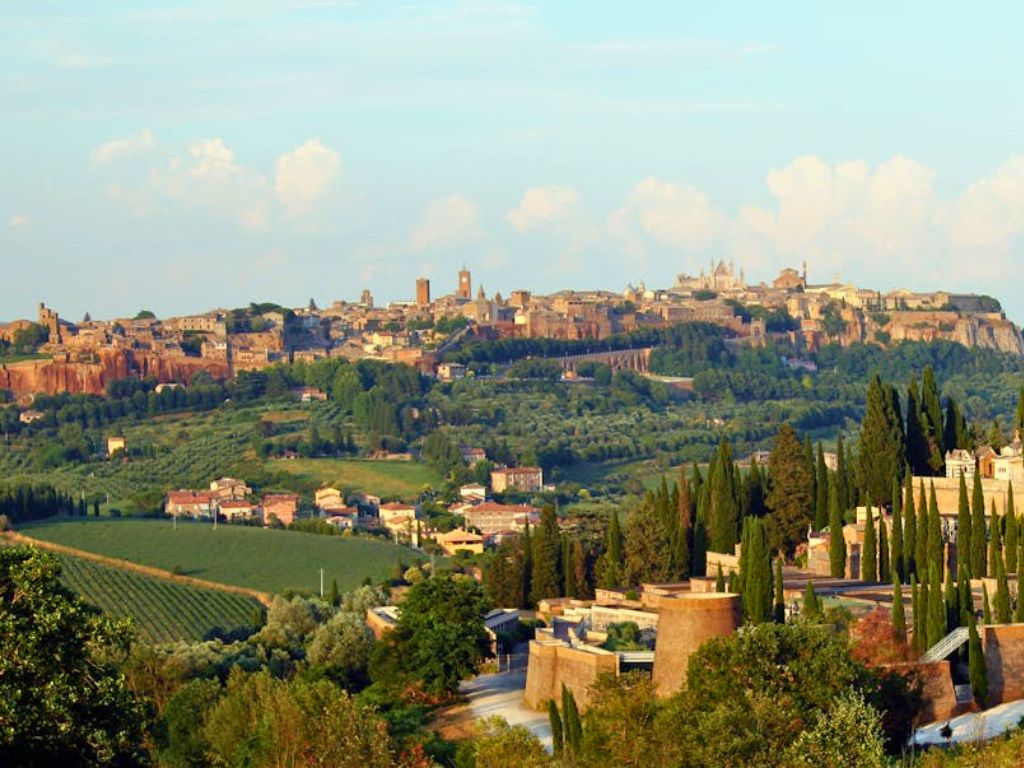
If you’ve ever taken the high speed train between Rome and Florence, you will have passed Orvieto. The town is in the region of Umbria, but is close to the border with the neighboring regions of Lazio and Tuscany.
Built on top of a tall rocky plateau, Orvieto has a long history. While archeologists have found evidence of human settlement in the area from the Paleolithic era, it was the Etruscans who were the first major civilization to settle here, in the centuries before ancient Rome was founded. The indigenous Etruscans preferred to build on hilltops, and archeological excavations have revealed many Etruscan ruins underneath modern day Orvieto.
The Etruscans clashed for centuries with the emerging power of Rome, but by the 3rd century BCE, the Romans had essentially won. The ancient Etruscan city was destroyed by the Romans here, but they refounded a new city on the same hilltop, which was somewhat incorrectly called urbs vetus (old city). This name evolved to Orvieto in time.
Through the centuries after the fall of the Roman Empire, Orvieto remained an important location. Never a huge city thanks to the limitations of the rock plateau, it was a crucial stop in central Italy for people traveling north from Rome. That proximity to Rome meant Orvieto was also important to the papacy. It became a Papal city within the Papal States, with Papal palaces built and the town being a safe refuge for multiple popes in the Middle Ages.
This legacy means that the relatively small town of Orvieto is absolutely packed with beautiful buildings, tons of historical sights and a particular charm. We always make sure to visit Orvieto whenever our adventures take us to this part of Italy as there is always something new to discover.
How to Get to Orvieto
Thanks to Orvieto’s central location, it is straightforward to reach the town from many major Italian cities. To reach the old town specifically however, there are a few key things to know about.
Arriving in the Modern Town
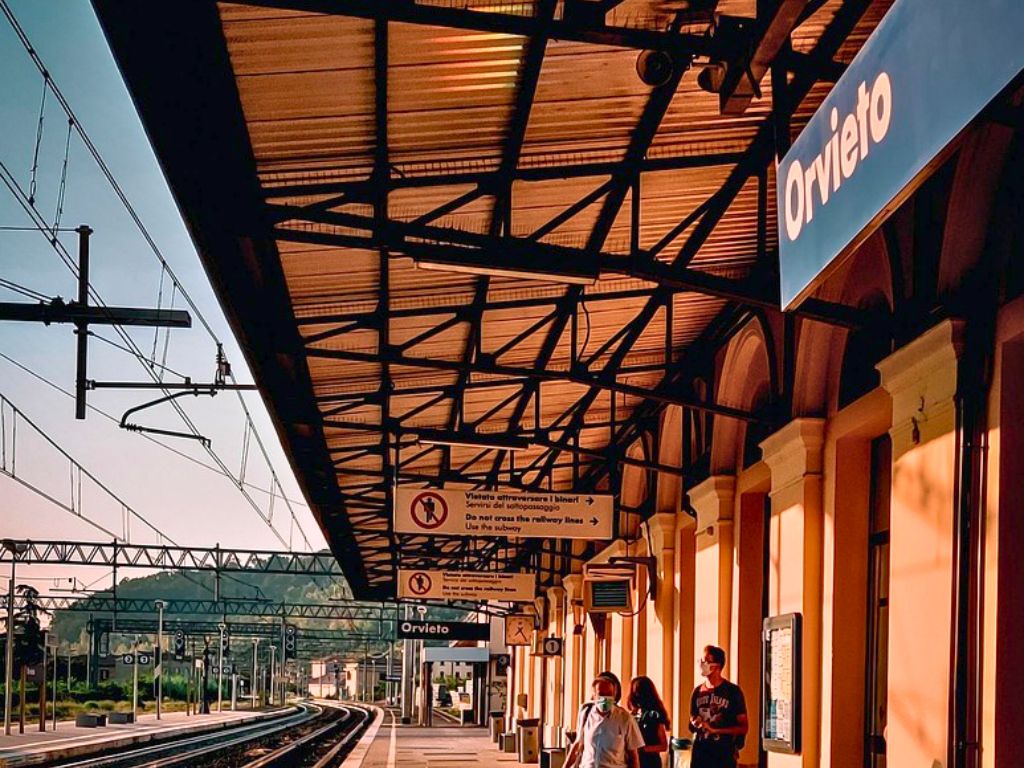
The first step to getting to Orvieto is reaching the modern town of Orvieto Scalo, which is located at the base of the hill.
The most convenient way to visit Orvieto is by train, especially if you are doing a day trip, but you can also go by road.
If you are driving, Orvieto is just off the A1 autostrada (freeway) which is one of the major road connections in Italy. It is about 1 hour and 45 minutes drive from Rome, and about 2 hours drive from Florence. Of course, if you are exploring the Umbrian countryside or southern Tuscany, the drive time will be shorter.
Wherever you are coming from, you should plan to park in the modern town. Driving in the historic center on top of the hill is restricted (and challenging) so you can use one of the parking lots around Orvieto train station.
Taking the train is easier and more enjoyable for us. There are multiple, regular connections between Orvieto and Roma Termini, Firenze Santa Maria Novella and more, plus you don’t have to worry about parking when you arrive.
Reaching the Old Town
However you have arrived in Orvieto, the next step is the same for everyone – getting up the hill to the old town.
Across the road from the entrance to Orvieto train station there is a funicular railway station, which will take you straight up the hill in just a few minutes. You come out at the eastern edge of the old town, and from here you can explore the historic center on foot.
The tickets for the funicular are cheap and they run regularly throughout the day, so this is definitely the most efficient way to reach the top of the hill. There are however buses that also go from the small piazza in front of the train station if you prefer or for when the funicular is not operating.
What to Do in Orvieto
Once you reach the old town of Orvieto Italy, you will need to decide what to do during your visit. If you have just a day then you will need to choose carefully to maximize your time here, but if you can spend a night or two here then you will have an even more amazing trip.
You can explore the Orvieto Underground tunnels and caves that have been used by the local residents for thousands of years, admire medieval fortifications and take in the views from multiple points around the town. There are also lots of local stores with artisan products to browse, and plenty of places to stop for a glass of local wine.
However, if you want to make the most of your visit, here are our Orvieto must-sees to help you plan your time:
Orvieto Cathedral
The Duomo di Orvieto is spectacular. Italy has no shortage of impressive churches, but the Orvieto cathedral is something really special.
Construction started in 1290 and didn’t officially finish until 1607, but despite the centuries of work, the cathedral is remarkably cohesive. The Gothic facade with spires reaching up into the sky is covered in beautiful mosaics, stained glass windows and sculptures. Once you go inside, the interior is no less special with striking striped tiled columns and walls, more stained glass and wonderfully intricate chapels and aspe.
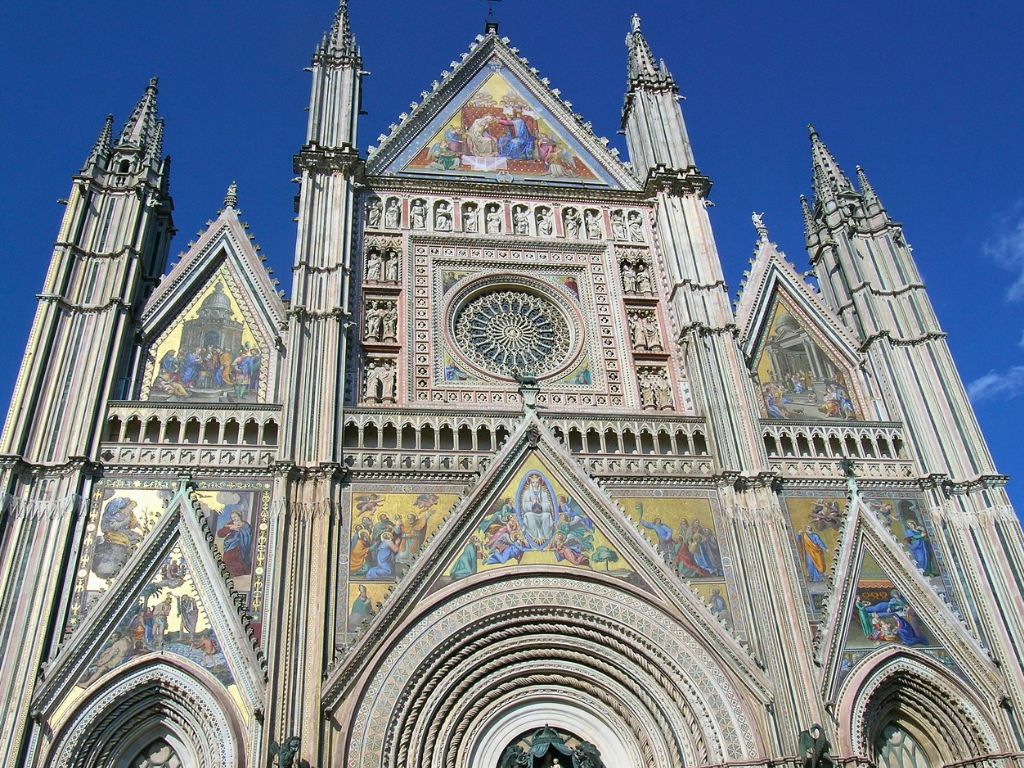
While you can (and should) spend some time in the Piazza del Duomo to admire the cathedral facade up close, another great way to get a different perspective of the church as a whole is to climb the Torre del Moro. This clock tower is older than the cathedral and when you climb to the top, you can see the whole town below you as well as the Umbrian countryside beyond.
Pozzo di San Patrizio (St Patrick’s Well)
From a tall tower to an underground well, Pozzo di San Patrizio is an essential stop for anyone interested in architecture and history.
Given Orvieto’s position on top of a rocky hill and central location, during a period of unrest in the 16th century the town was where pope Clement VII fled when Rome was sacked in 1527. Orvieto had strong city walls and was a difficult place for enemies to attack, but the pope was worried about the town’s water supply in the event of a long siege.
Clement VII was able to return to Rome in 1528 but he wanted to ensure Orvieto was the best place of refuge should he or future popes need to stay there again. He therefore appointed architect and engineer Antonio da Sangallo, who had worked on St Peter’s Basilica among other projects in Rome, to build a well to reinforce the water supply.
Sangallo’s design was inspired, and still admired today. He created a double helix with two ramps that allowed people and donkeys to go up and down separately, digging over 50 meters down into the rock to build these and the well. The ramps wind around the well shaft, with windows cut into the rock for light, and you can walk up and down them today.
Orvieto’s Etruscan History
There are lots of places in Orvieto where you can learn more about the town’s Etruscan history.
The Orvieto National Archaeological museum is a great place to start, with multiple rooms showing Etruscan artifacts that have been found locally, as well as explaining more about who the Etruscans were. You can also visit the Museo Claudio Faina and Civic Museum which has some wonderful ceramics and bronzes from Etruscan times.
However you don’t have to stay inside to learn about Orvieto’s Etruscan past. Close to Pozzo di San Patrizio you can visit the remains of an Etruscan temple, and further down the hill is the Etruscan necropolis of Crocifisso del Tufo where many of the best finds in Orvieto’s museums were originally discovered.
Day Trips from Orvieto Italy
While there is a lot to do in Orvieto, if you’re able to stay for a few days, the town is the ideal base to explore the surrounding region.
There are many vineyards in the Orvieto area, which make the most of the volcanic soil to create delicious wines. The white Orvieto Classico DOC is the most well-known, but you’ll also find local full bodied red wines too. Wine has been produced here since Etruscan times and often you’ll find wine bottles still stored in the same stone caves they used. Visiting one of these vineyards and doing a wine tasting is an essential activity, and a fun stop on our Italy Harvest tours.
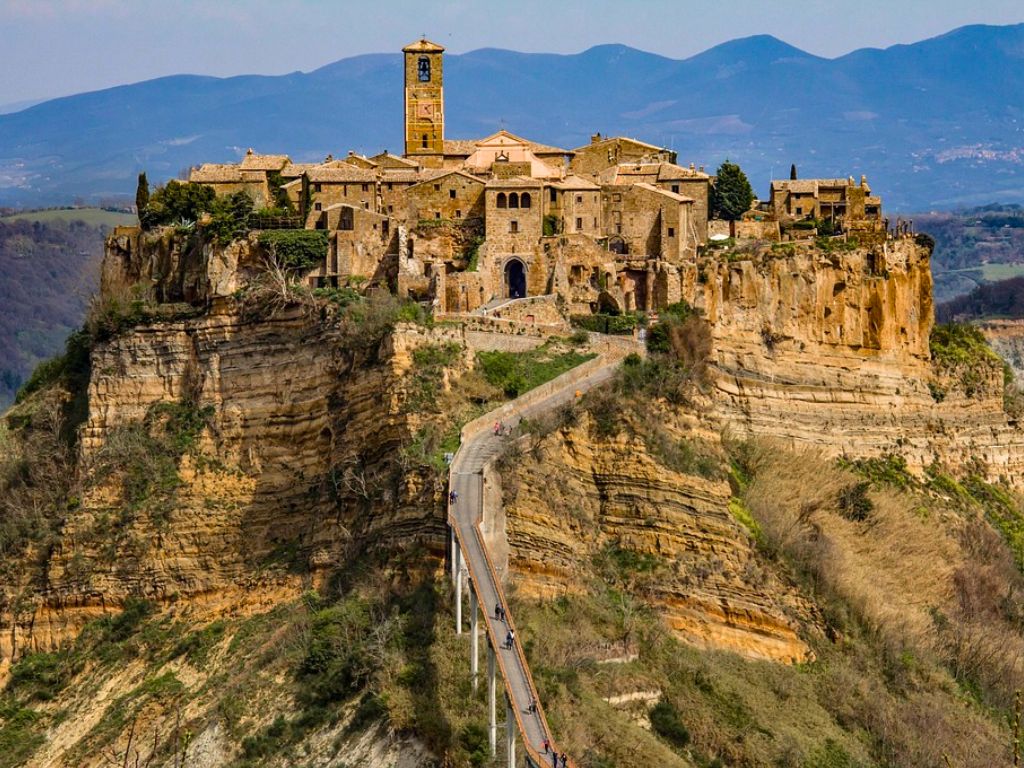
Another nearby attraction that is easy to reach from Orvieto is Civita di Bagnoregio, the “dying city”. Also settled by the Etruscans, Civita was literally carved out of the rock face. Remnants of the ancient Etruscan and Roman cities still exist alongside medieval churches, but the entire town has been slowly eroding away since a devastating earthquake in 1695. Due to the way the surrounding rock is wearing away, the only connection to the town is a footbridge so there is no modern day traffic and it really does feel like you are stepping into the past.
Getting to Know the Local Cuisine
After exploring Orvieto, you will definitely be hungry. Luckily, Orvieto has plenty of delicious food traditions so you can taste lots of different local dishes.
Orvieto has always been able to make the most of the fertile countryside so expect to see plenty of pork and game meats on menus (pigeon and wild boar are popular here) alongside truffles when in season, chestnuts and beans. Whatever you opt for, make sure to taste some of the local olive oil which is wonderful.
Here are some particular local dishes to look out for when you visit Orvieto:
- Umbrichelli – this is a type of pasta specifically from here, made from just flour and water at a time when food had to be stretched as far as possible. It is a type of thick spaghetti, so goes well with a ragù, truffles and tomato sauces.
- Pollo alla Cacciatora – literally meaning “hunter’s chicken” this is a sort of stew with chicken pieces, onions and peppers. It is full of herbs and as the meat is slow cooked, it is a really rich tasting dish.
- Lumachelle – the name means snails but don’t worry, this refers to the shape of this savory bread not the ingredients or flavor! Pieces of pancetta and Pecorino cheese are added to a bread dough before being shaped into whirls sort of like a snail’s shell and baked. They are the perfect mid morning snack.
- Palomba alla Leccarda – this pigeon dish comes straight from the Middle Ages. Wood pigeons are slowly roasted on a spit, with a tray beneath catching the drippings which are mixed with red wine, olive oil and aromatic herbs to create a hearty sauce.
Visit Orvieto With Us
Orvieto is one of the places that we feel makes visiting Italy so special. It has a distinctive culture and history which is specific to this town, there is a lot to do and see but you can also slow down and embrace the local way of life. Orvieto is often skipped in favor of Rome or Florence, but for us, this is an unmissable stop on an Italian itinerary. Want to join us and get to know Orvieto yourself? Find out how we make it part of our Italy Harvest experience here, and contact us today if you’d like to be part of that adventure.