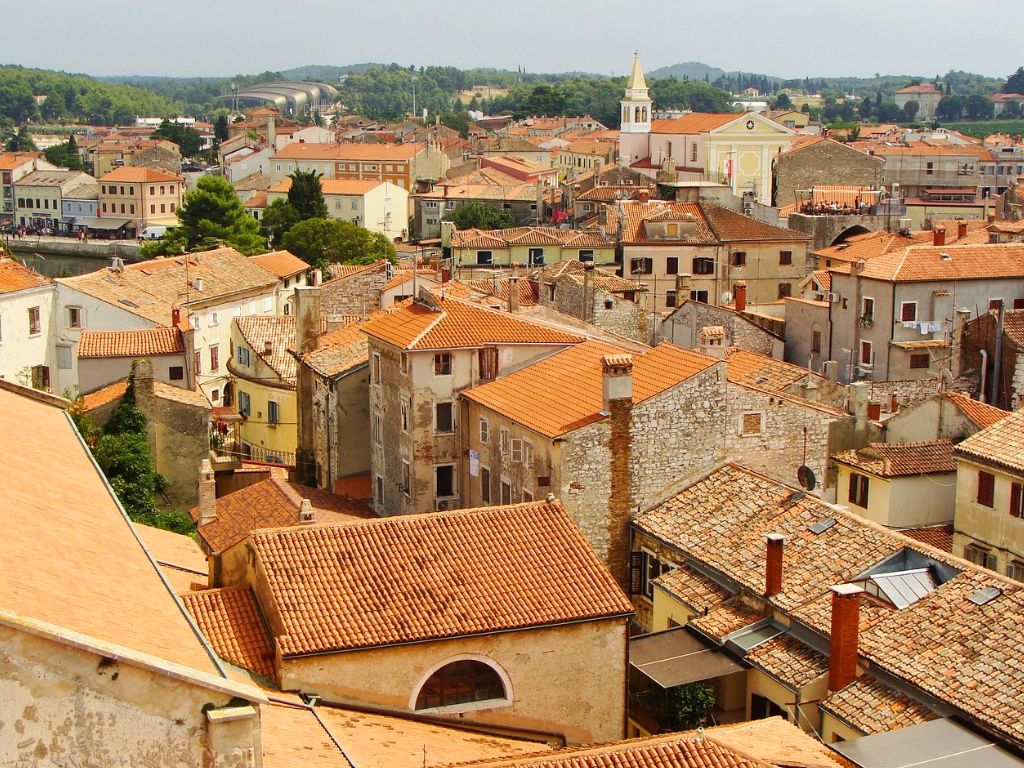

When people talk about visiting Croatia, more often than not they focus on Dubrovnik and the Croatian islands in the south of the country. While we love this part of Croatia, for us, there is something extra special about Istria, a peninsula to the north west that borders Slovenia. The area has a fascinating history and is home to some of the most delicious wines you’ll ever find. We feel the Istrian peninsula deserves your attention so read on to discover what makes it such a great travel destination.
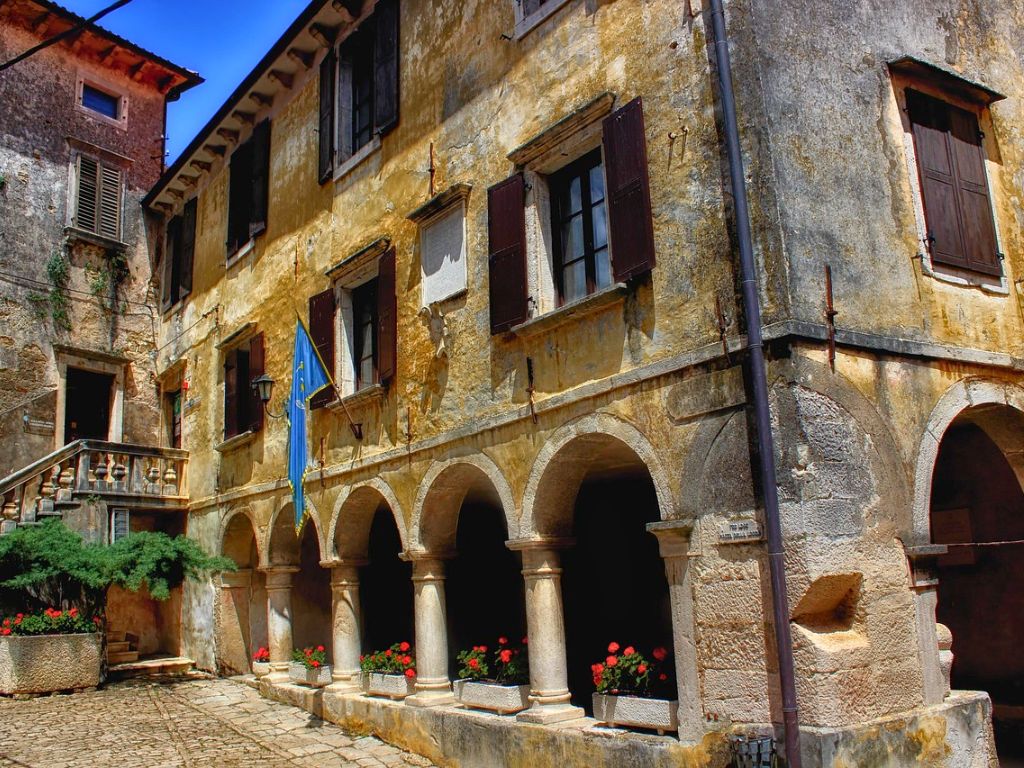
An Introduction to the Istrian Peninsula
As we’ve mentioned, the region of Istria is located on the north west coast of Croatia. It is almost completely surrounded by the Adriatic sea, but as well as a stunning coastline, there is a majestic Istrian interior to explore too.
Geographically, a tiny part of the peninsula is in Slovenia and Italy (the Italian city of Trieste is only around 40km from the Croatian border in Istria). This is the result of centuries where Istria was a vital part of European history:
The Histri and Ancient Rome
Istria’s name comes from an ancient tribe of people called the Histri who inhabited the peninsula from around the 11th century BCE. The ancient Romans conquered the Histri in 177 BCE, taking control of the ports and cultivating the land. The port town of Pula was expanded and Romanized, with a huge amphitheater, city walls and gates, triumphal arches and more built. Using the name of the original tribe, the Romans named the area Histria, which eventually became Istria.
Under Roman rule the Istria peninsula was classed as part of Italy, combined with the neighboring region of Venetia (another name taken from the people the Romans conquered). From this point, the northern Italian area of Veneto and Istria would be strongly linked.
Istria continued to be part of the wider Roman empire until the 8th century. The Frankish kingdom (which would eventually become modern-day France) had expanded their power across northern Italy and into Istria, but they were unable to exert control effectively and by the 9th century had been superseded by the rising power of Venice.
Venetian and Austrian Rule
Venice had slowly been growing in power and influence since the 7th century. The Republic of Venice transformed into a trade giant, building new ships and developing trade routes that delivered fabulous wealth back to the lagoon city. As well as wealth, the new republic was expanding their control over the surrounding coastline.
Through the 10th century, Istria had been hit by continued attacks by pirates, and the coastal towns asked Venice for help, signing an act of devotion that resulted in Venetian ships helping push back the raiders. Istria developed closer ties to Venice and by the 14th century, much of the peninsula was officially part of the Venetian Republic.
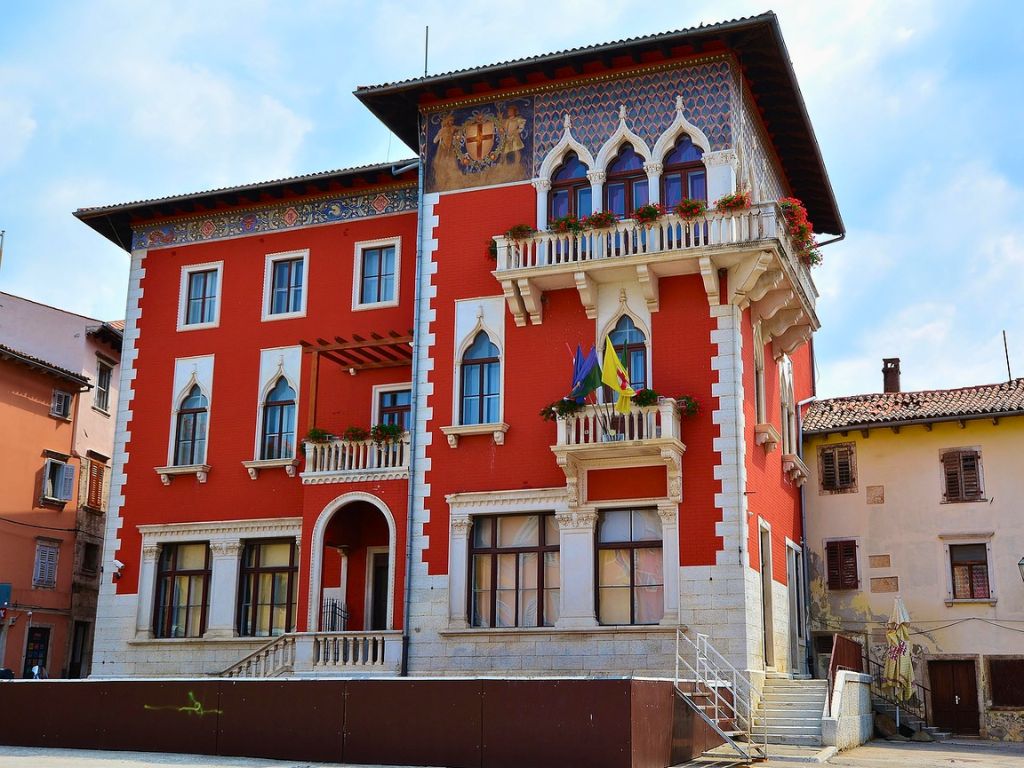
The Venetians were not able to maintain their power and in 1797 the republic was officially done. At this point Istria became part of the Hapsburg monarchy lands, a royal family from Austria. Following a brief interlude when Napoleon occupied Istria as part of his European conquests, Austria took control of Istria again in 1814.
In the 1860’s, Istria was separated from the regions of Friuli and Veneto. These became part of the new Kingdom of Italy, but Istria remained part of the Austro Hungarian empire. People in the region were unhappy with this and wanted to become part of Italy, but the Austrians were strongly opposed.
Istria Through the 20th Century
While the Austrians started a campaign in the early 20th century to promote the local Croat language and the rights of the local Croatian and Slovenian people, World War I intervened. Austria-Hungary was on the losing side, Italy was one of the winners and Istria officially became part of the Italian kingdom.
After Mussolini took power in 1922, the changes implemented by the Austrians were reversed. Now it was the Slavic people who were being forced to give up their languages. The Italian government of the time went much further, forcing Croatian names to be Italianized, schools and institutions were made to close and many Croatians and Slovenians left to settle in Yugoslavia.
After the end of World War II, in 1947 it was decided by the Allied powers that while the area around Trieste would eventually stay Italian, the rest of Istria would become part of Yugoslavia, divided internally between the People’s Republics of Slovenia and Croatia.
Yugoslavia had gone from a kingdom to a communist state, led by Marshal Tito until his death in 1980. Tito successfully kept Yugoslavia neutral from Russia, and sought to improve industry and education for the country. He was such a strong leader that when he died it was unclear how Yugoslavia could continue.
The system of individual People’s Republics that made up the overall country started to disintegrate, with conflicts starting in Serbia that led to Yugoslavia being dissolved in 1991. Croatia declared itself an independent state, along with Slovenia, the same year, but this was strongly opposed by Serbia and ethnic Serbs living in Croatia who wanted to preserve the wider state.
Recent History
The Croatian War of Independence lasted four years, with significant deaths on both sides and a huge amount of damage done to the country. Since the end of the war in 1995, a huge rebuilding effort has happened, with Croatia becoming an EU member and welcoming a shift to economic growth.
Today the Istrian identity is complicated, with a dual official language of Croatian and Italian. Many places have both Croatian and Italian names (Istra – Istria, Pula – Pola, Rovinj – Rovigno) but there are wide variations in the number of people who actually speak Italian. As much as we love Italy, Istria is different, and the natural beauty and history on display make it one of our favorite places in Croatia to explore.
Places to See in Istria
For a relatively small area, there is a lot to do in the Istrian territory. As well as the major Istrian towns and cities like Pula, Rovinj, Motovun and Grožnjan, you can bathe in the sea or explore the rolling hills filled with olive groves, vineyards and small medieval towns.
Here are our favorite places to go when we visit the Istrian peninsula Croatia, all featured in our upcoming harvest tour:
Rovinj
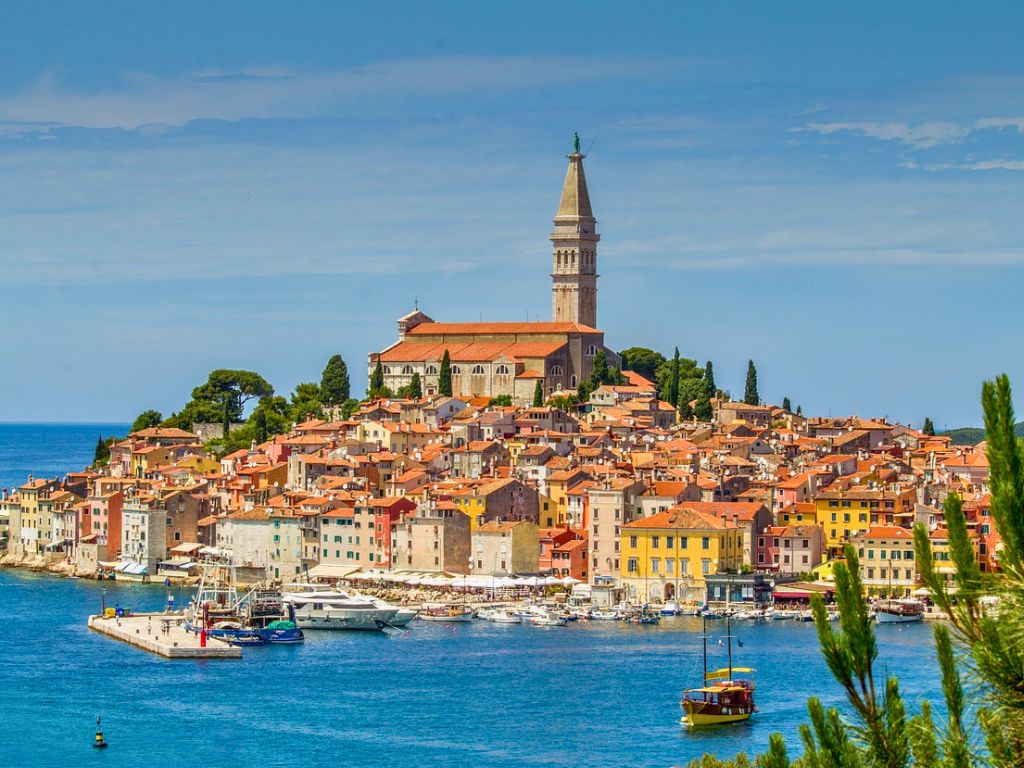
The idyllic town of Rovinj is on the west coast of Istria, with the old town reaching out into the Adriatic sea. When the Venetians were at the peak of their power, Rovinj was an important port town for them. Until a channel was filled in during the 1700’s, Rovinj was actually an island, and the architecture of the town reflects this, with the buildings going right up to the water’s edge.
While you can simply wander the narrow streets and soak up the atmosphere, we highly recommend visiting the church of St Euphemia. Completed in 1736, the church was built on a hill in the middle of the old town, on the site of early Christian buildings. The Baroque church is beautiful but what makes it extra special is the older, 60 meter-tall bell tower. Resembling the bell tower of St Mark’s Basilica in Venice, you can climb the stairs inside the tower for panoramic views of the town, the coast line and islands beyond.
Pula
As Istria’s largest city, most visitors to western Croatia will pass through Pula at some point. Located at the southern tip of the peninsula, Pula has been an important settlement for millenia – archeological evidence of humans from the Neolithic and Bronze Ages has been found here.
During ancient Roman times, Pula became a crucial port and many classical elements of Roman towns were built. The main surviving site is the amphitheater, or Pula Arena. While this was smaller than the Colosseum in Rome, it is the only example anywhere in the world that still has its original circular wall structure intact.
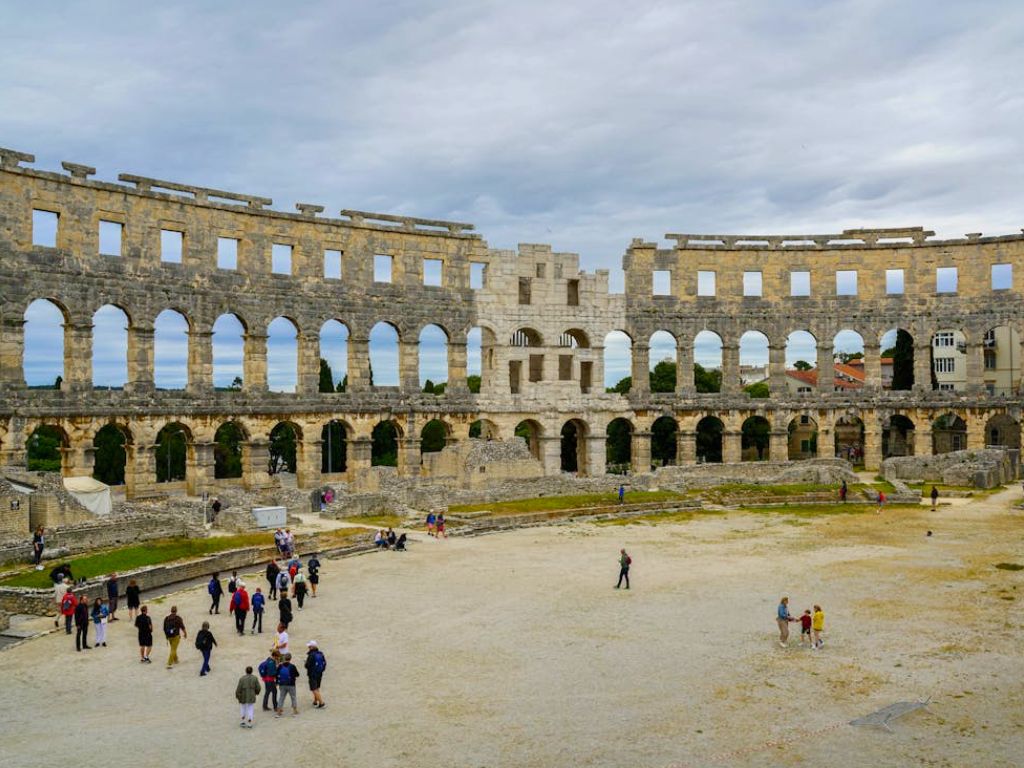
Visiting the arena is a must-do, but there are other ancient ruins to see in the city, including the triumphal Arch of the Sergii and the Temple of Augustus, and the exhibits at the Pula Archeological Museum. You can also visit some of the interesting churches reflecting the centuries of changing rulers, explore the old town and watch the constant boat traffic in the harbor.
Brijuni Islands
Just north of Pula are the Brijuni islands, today one of Croatia’s National Parks. These islands have a fascinating history; after centuries of being used primarily as quarries, the Austro Hungarian empire used it as an extension of their naval base in Pula and built a large fortress on the largest island Veli Brijun.
After this fortress was abandoned, an Austrian businessman bought the entire archipelago and turned them into a luxurious vacation estate. Beaches, hotels, restaurants, tennis courts, a golf course, a casino and more were built through the early 20th century, but in the 1930’s the estate went bankrupt and everything closed. The islands saw new life after World War II, when President Tito made the estate his official summer residence.
Today you can visit the main island, where there is a park which is home to descendants of various animals gifted to Tito, an area with over 200 dinosaur footprints, ancient Roman ruins, a museum dedicated to Tito and the luxury vacation estate. The islands make for a fun day trip from Pula, or you can stay overnight in one of the hotels on Veli Brijun.
The Hill Towns of Northwestern Istria
While the coastal parts of Istria are wonderful to explore, take some time and head north through central Istria where you’ll come to a completely different area filled with medieval towns. These towns and villages sit on top of the hills that dot the countryside, and allow visitors to see a different side of the region.
Our particular favorite towns are Motovun and Grožnjan. Motovun was built on the site of an ancient city but its current form took shape under Venetian rule. The town was fortified with thick stone walls, towers and gates which are still there today, so you can walk around them and admire the far-reaching views. In the rest of the small town you’ll find numerous bars, restaurants and stores, many of which feature the local truffles.
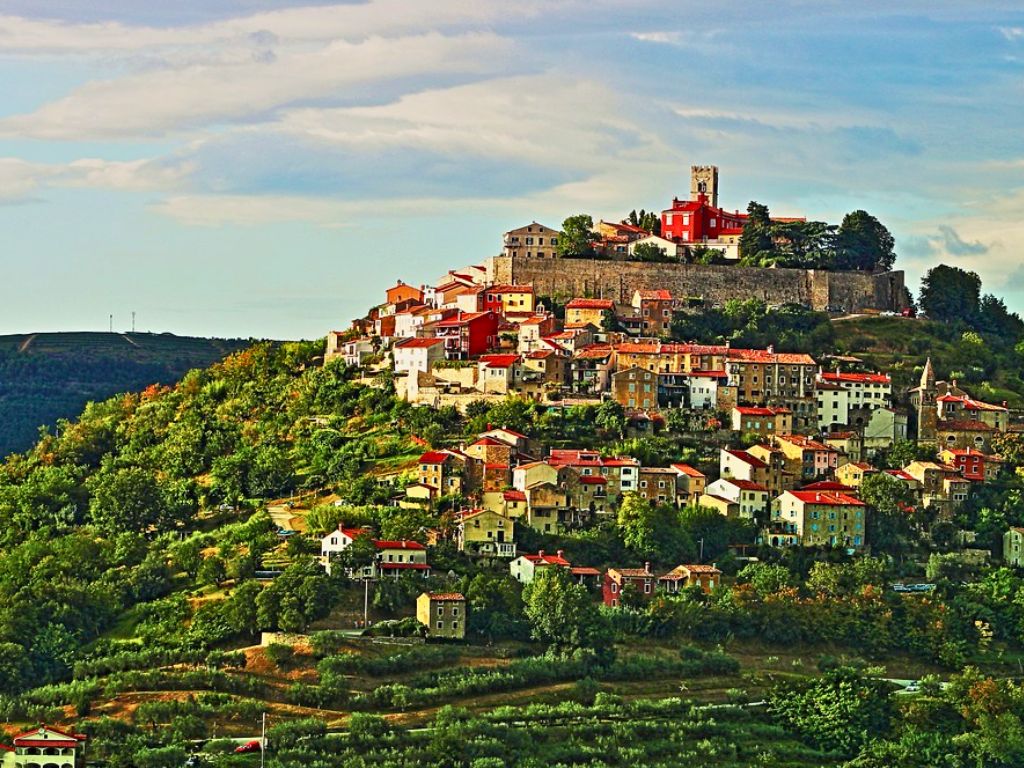
Grožnjan feels different to some of the other hill towns. With a similar history through the Middle Ages, in the 1960’s the almost-abandoned town was regenerated by a group of artists, who set up studios and galleries as well as homes. Now known as the town of artists, when you visit you will discover all sorts of original art, and in the summer there is a fun jazz festival.
Food, Wine, and Culinary Traditions in Istria
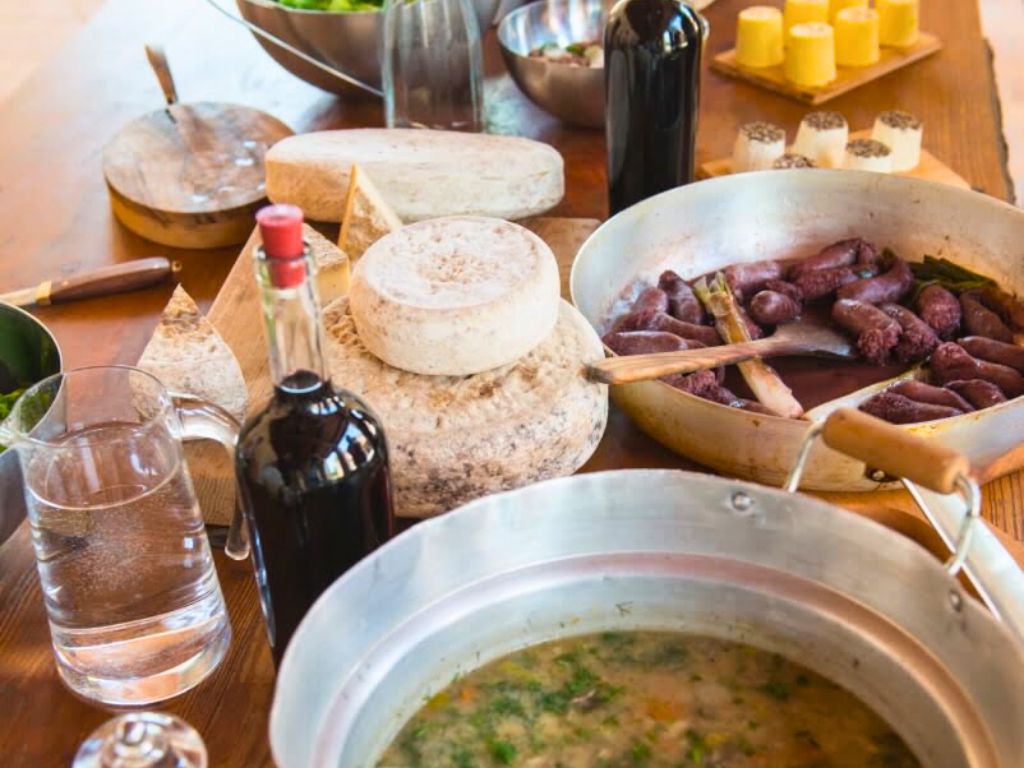
One thing no trip to Istria could be complete without is an exploration of the wonderful local cuisine. Croatian food and wine is not particularly well known outside of the region, but that is because the locals prefer to consume much of it themselves – once you have been here in person, you will understand why.
Unsurprisingly, the culinary traditions here draw on both Italian and central European influences. You’ll find plenty of pasta dishes on the menu, and of course lots of fresh fish along the coast, often prepared in familiar Italian ways. However you can also enjoy more hearty beef and pork dishes, as well as rich soups with punchy flavors, lots of cheeses and cured meats.
Much of Istrian food is elevated by the use of their local olive oil. Consistently voted as some of the best quality olive oil in the world, Istrian olives produce a peppery oil that is absolutely delicious. Hard to find outside of the region, if you’re able to fit a bottle or two of the olive oil in your baggage to take home, you won’t be disappointed.
Another excellent example of Istrian produce is the local wine. The main indigenous grape varieties you’ll see are Malvazija (for white wine), Teran (for red wine) and Momjan Muscat (for sweet wines) but there are many varieties and blends to taste. The varied terroir of Istria, from the warm Adriatic coast in the west to the eastern half with tall mountains means that there are many delicious wines to discover here – which we always make time for when we take guests to Istria.
Discover Istria With Us
We hope that we’ve given you a taste of what makes Istria such a special place, and why it deserves to be part of a future travel adventure. If we’ve inspired you, take a look at all the details of our upcoming Slovenia and Croatia Harvest tour here or contact us if you’d like to know more about this part of Croatia and how you can visit it for yourself.